Noise-optimized audio
Filters stationary noise, environmental sound, and overlapping speech so agents stay accurate on real-world calls, not just quiet test environments.
Twilio is a communications API platform, with voice, messaging, and AI building blocks you assemble yourself. TelEcho is a managed conversational AI platform that deploys a working voice, WhatsApp, and WeChat agent. See the full Twilio vs TelEcho comparison below.
Twilio and TelEcho operate at different layers of the stack.
Best for engineering teams building a custom communications stack from scratch.
Best for teams that want a working agent, not a stack to assemble.
Twilio has real strengths. Its communications infrastructure spans voice, SMS, WhatsApp, RCS, email, and video, backed by a large developer ecosystem and tools like Conversation Relay for building voice AI. The trade-off is that none of it arrives as a finished agent; your team still designs and maintains the conversation logic on top.
TelEcho deploys a configured voice, WhatsApp, and WeChat agent. Twilio's Conversation Relay and Voice Intelligence tools are pieces your team wires into your own LLM and call logic.
TelEcho quotes a single per-minute rate. A comparable agent built on Twilio combines per-minute call charges, Conversation Relay at $0.07 per minute, speech recognition, and text-to-speech into one bill.
TelEcho states its HIPAA and BAA coverage directly on its pricing tiers. Twilio's public trust center page doesn't list specific certifications or a BAA; that documentation is available only by request.
TelEcho agents are typically live in about 15 days. Building an equivalent agent on Twilio's APIs is a custom engineering project with no published timeline, since the scope depends on what your team builds.
TelEcho's voice, WhatsApp, and WeChat agent runs from one configuration out of the box. Twilio gives you APIs for more channels, including voice, SMS, WhatsApp, RCS, and email, but the AI logic for each one is still something your team has to build.
See how TelEcho's conversational AI platform stacks up against a Twilio-based build on the setup effort, compliance, and cost that actually affect your rollout.
| Capability | TelEcho | Twilio |
|---|---|---|
| Setup | ||
| Deployment model | Managed, configure-not-code | Programmable APIs; build your own AI agent logic |
| Typical setup time | ~15 days | Not published (custom build; industry average ~60+ days) |
| Channels supported | Voice, WhatsApp, WeChat (agent included) | Voice, SMS, WhatsApp, RCS, email, video (APIs only, no agent) |
| Compliance & Reliability | ||
| HIPAA / BAA | Included on all tiers | Not listed publicly; available by request |
| Uptime SLA | 99.99% platform uptime (published) | Not published (status page only) |
| Security certifications | HIPAA, BAA | ISO 27001 referenced; other certifications by request |
| Cost | ||
| Entry plan | Free to start (Build) | Free trial, $15 credit |
| Pay-as-you-go rate | $0.07–$0.31/min (all-in) | $0.0085–$0.0140/min calls + $0.07/min Conversation Relay + per-use STT/TTS fees |
| Monthly platform fee | None | None; phone numbers from $1.15/mo |
| Enterprise pricing | Custom, from $0.05/min | Custom (volume and committed-use discounts via sales) |
Figures sourced from telecho.io and twilio.com pricing and trust center pages, accessed October 2026. Compliance and uptime figures reflect each company's own published statements.
No Conversation Relay, speech recognition, and text-to-speech bills to combine yourself. TelEcho's per-minute rate covers the finished voice and WhatsApp agent, typically live in about 15 days.
Book a Custom AI Strategy Call
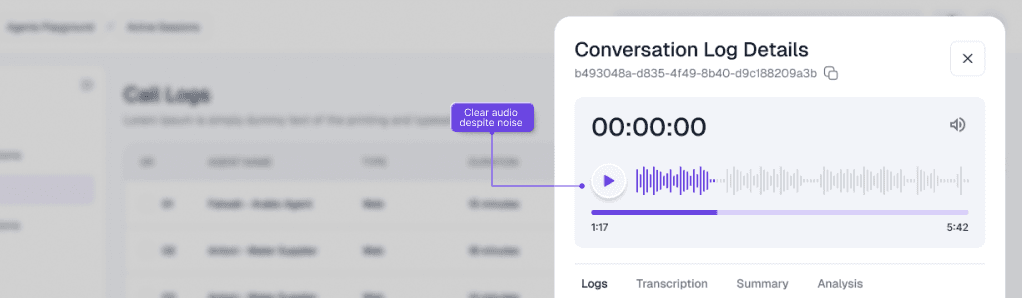
An AI phone answering system is only as good as what happens on a bad connection or a noisy line.
Filters stationary noise, environmental sound, and overlapping speech so agents stay accurate on real-world calls, not just quiet test environments.
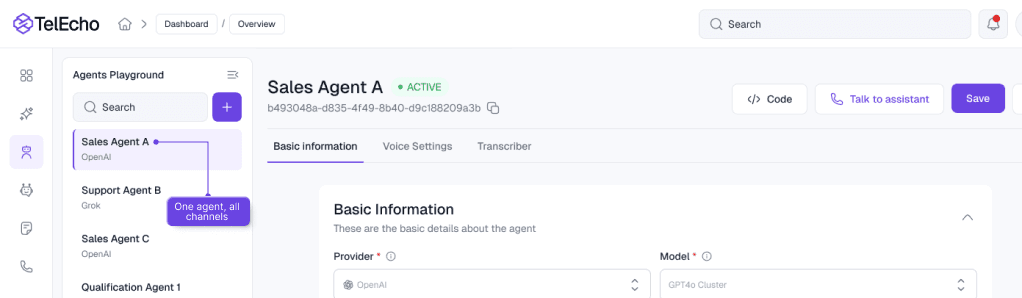
Update the agent once and the change applies everywhere it talks to customers, instead of maintaining a separate build for each channel.
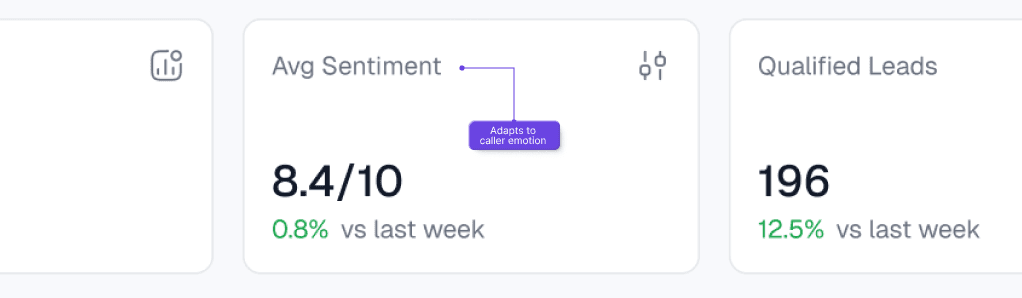
Agents adjust tone and pacing based on caller sentiment instead of running a flat, scripted response regardless of how the conversation is going.
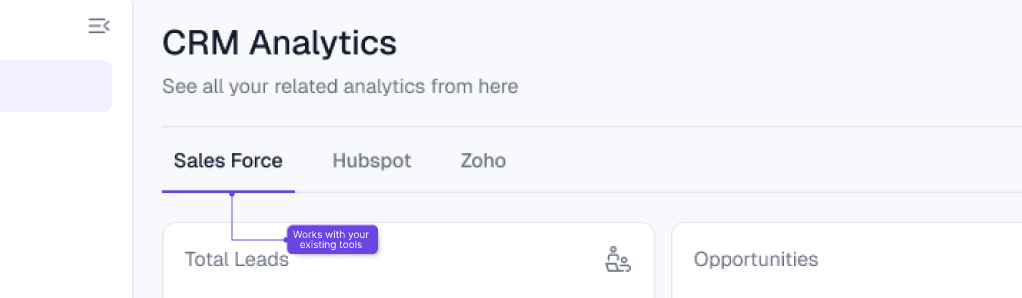
Connects to existing CRMs, booking systems, and support tools without a custom middleware layer your team has to build and maintain.
If you're evaluating a Twilio alternative because you want a finished AI agent instead of a set of communications APIs to assemble, TelEcho's managed model is built for that handoff.
Teams researching Twilio vs TelEcho, or running a broader Twilio comparison against managed platforms, tend to ask the same handful of questions before switching.
Twilio is a communications API platform for voice, SMS, WhatsApp, and other channels; building an AI voice agent on it means combining Twilio's call, speech, and Conversation Relay tools with your own LLM and orchestration code. TelEcho is a managed platform that deploys a configured voice, WhatsApp, and WeChat agent without that build. The core Twilio vs TelEcho difference is raw communications infrastructure versus a finished AI agent.
Yes, but it requires engineering work. Twilio's Conversation Relay and Voice Intelligence products are building blocks, priced separately from call minutes and text-to-speech, and your team still has to connect an LLM and write the conversation logic. TelEcho deploys that logic for you.
Twilio's own pricing page lists $0.0140 per minute for outbound local calls and $0.0085 per minute for inbound local calls, plus $1.15 a month per local phone number. Voice AI features are priced separately, including Conversation Relay at $0.07 per minute and text-to-speech starting free for basic voices and up to $0.013 per 100 characters for generative voices.
Twilio's public trust center page doesn't list a HIPAA BAA, SOC 2, or PCI certification directly; it points to a separate request form for security and compliance documentation. TelEcho publishes its HIPAA and BAA coverage directly on its pay-as-you-go and enterprise tiers.
It depends on whether your team wants to build the agent or deploy one. Twilio suits enterprises with engineering teams that want to assemble a custom communications stack across voice, messaging, and video. TelEcho suits enterprises that want a working voice, WhatsApp, and WeChat agent with HIPAA and BAA coverage included, without writing and maintaining the orchestration code.
Yes. HIPAA and BAA coverage is included on TelEcho's pay-as-you-go and enterprise tiers at no extra charge, published directly rather than available only on request.
Yes. Teams that built a custom voice agent on Twilio's APIs typically migrate their call flows and integrations into TelEcho's configured platform instead of continuing to maintain their own Conversation Relay and LLM orchestration code.
The right Twilio alternative depends on whether a business wants another set of communications APIs or a finished AI agent. TelEcho is positioned as a managed alternative to a Twilio-based build for teams that want a deployed voice, WhatsApp, and WeChat agent rather than infrastructure to assemble.
TelEcho deployments typically go live in about 15 days. Building an equivalent agent directly on Twilio's APIs is a custom engineering project with no published timeline; industry-wide, custom voice AI builds on raw infrastructure average closer to 60 days.

Launch a voice and WhatsApp agent for your clinic, hotel, restaurant chain, or support team in about 15 days, not a quarter.