
.png)
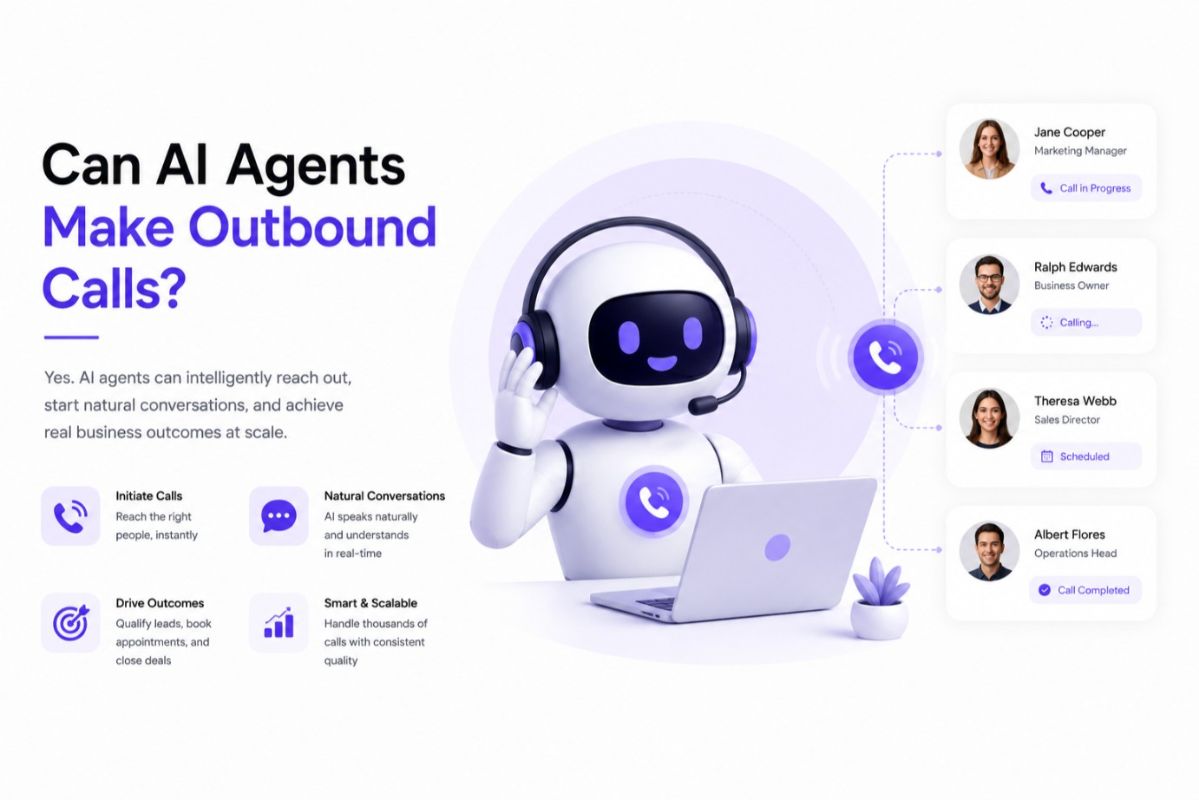
AI agents can make outbound calls, and the businesses that have deployed them are not going back.
Not because AI is a trend worth chasing. Because the math is too clear. An AI voice agent handles thousands of simultaneous calls at a fraction of the cost of a human team, runs 24/7 without fatigue, and logs every outcome directly into your CRM without a single missed entry.
This guide explains how AI outbound calling actually works, which use cases produce the clearest ROI, and what separates platforms that perform in production from ones that only look good in a demo.
What an AI Phone Agent Does on an Outbound Call
This is not a robocall. A robocall plays a recording and hangs up. An AI voice agent listens, understands, and responds in real time based on what the other person actually says.
In a single outbound call, a well-configured AI agent can:
Address the recipient by name and reference their account, purchase history, or last interaction
Ask qualification questions and respond to answers outside a fixed script
Handle objections and route the conversation based on sentiment
Book an appointment, confirm an order, or qualify a lead without human input
Transfer to a live agent when the situation requires it, with a full call summary already in the queue
Log every outcome, intent signal, and data point directly into your CRM
The difference between that and a phone tree menu is significant. This is a two-way conversation, not a routing system.
How the Technology Works
Three components run in sequence on every outbound call:
Speech-to-Text (STT): When the recipient speaks, audio converts to text in near real time. Accuracy here determines everything downstream. A single transcription error sends the entire response chain in the wrong direction.
LLM Processing: The transcribed input goes into a large language model (GPT-4o, Claude, or a fine-tuned model) that generates a contextually appropriate response using the conversation history and any CRM data piped into the session. TelEcho is LLM-agnostic, which means you are not locked to one model's pricing or performance ceiling.
Text-to-Speech (TTS): The response converts back to speech and reaches the caller. TelEcho's TTS layer delivers near-human voice quality across its supported languages and regional accents.
Why Latency Is the Factor That Actually Matters
The three components above are table stakes. The factor that separates usable AI calling from frustrating AI calling is latency: the time between when a person finishes speaking and when the AI begins its response.
Human conversation operates at 200ms to 400ms. Early AI calling systems sat at 800ms to 1,200ms, which is the gap that made AI calls feel broken. TelEcho operates at ultra-low latency, landing inside the natural human conversation range. That is what makes a call feel like a conversation rather than a broken phone connection.
Use Cases Where AI Outbound Calling Produces Clear ROI
Lead Qualification at Scale
AI voice agents call inbound leads within seconds of form submission, run through a qualification framework, score the prospect on responses, and route sales-ready leads to reps with a pre-populated call summary in the CRM.
Human reps close. The AI filters. Neither step compromises the other.
COD Order Confirmation
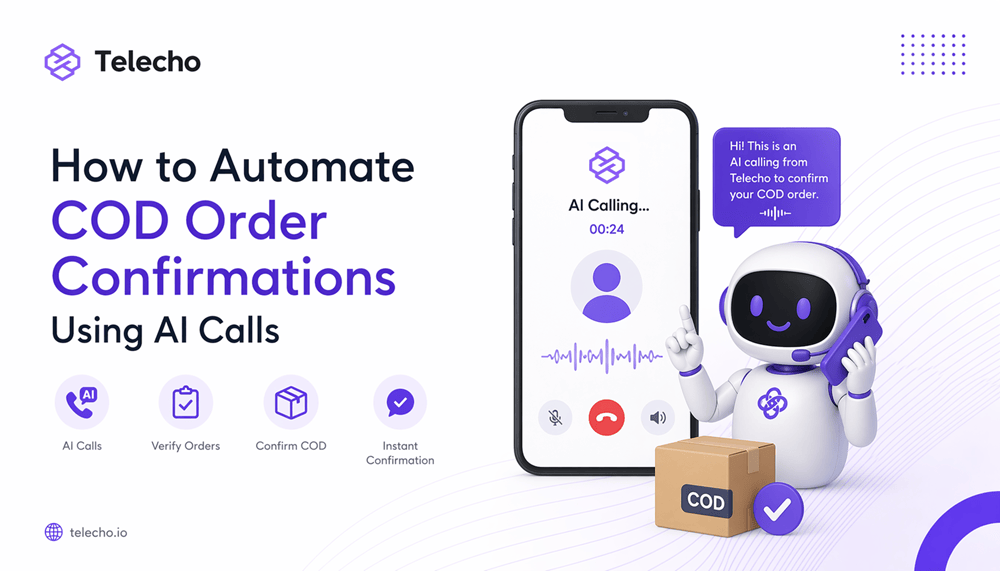
In Pakistan, South Asia, the Middle East, and Southeast Asia, cash-on-delivery is the dominant payment method. Unconfirmed or returned COD orders are a significant cost driver for e-commerce businesses.
AI agents call customers immediately after purchase to confirm order intent, reduce return-to-origin rates, and eliminate the manual calling teams that most businesses still rely on for this workflow. The cost reduction per confirmed order is significant.
Appointment Booking and Reminders
Healthcare providers, service businesses, and real estate teams use AI voice agents to confirm, schedule, and remind customers of upcoming appointments. No-show rates drop when confirmation calls happen consistently, not when a team member remembers to make them.
Customer Reactivation Campaigns
Dormant customers in the 60 to 180-day window respond to outreach that references their specific purchase history, not a generic "we miss you" script. AI agents personalize each call using CRM data, handle initial objections, and warm up contacts before routing them to a human rep for closing.
Payment Reminders
AI removes the interpersonal friction in early-stage payment reminders. The interaction is structured, consistent, and non-adversarial, which produces better outcomes than human-to-human collection calls at the reminder stage while maintaining full compliance through automatic call logging.
Post-Sale Follow-Up and CSAT
AI agents call customers after service delivery to collect satisfaction scores, flag negative experiences before they surface as public reviews, and introduce relevant upsell offers when the customer relationship is still warm.
AI Agents vs Human Agents on Outbound Calls
Factor | Human Outbound Agents | TelEcho AI Voice Agents |
Daily call capacity | 80 to 120 calls per agent | 500 to 5,000+ per instance |
Availability | Business hours only | 24/7 across time zones |
Message consistency | Variable (fatigue, mood) | 100% consistent across every call |
Average handle time | 4 to 8 minutes | 2 to 4 minutes |
CRM data accuracy | 70 to 85% (manual logging) | 99%+ automated |
Cost per call (fully loaded) | $5 to $15 | $0.10 to $0.50 |
Language support | One or two per agent | Multilingual by design |
Uptime SLA | Business hours, human-dependent | 99.99% |
Businesses that have migrated outbound operations to TelEcho report operational cost reductions of approximately 60% compared to equivalent human agent teams.
What to Look For in an AI Outbound Calling Platform
Not every AI calling platform delivers the same results under production conditions. These are the factors that actually matter:
Latency under load. Demo latency and production latency are different numbers. Request verified performance data from live deployments at call volumes comparable to yours.
LLM flexibility. A platform locked to one language model limits your options as better models release. TelEcho supports GPT-4o, Claude, and other leading models, letting you optimize for performance and cost independently.
Multi-channel coverage. Phone is the primary outbound channel in most markets. In South Asia, the Middle East, and Southeast Asia, WhatsApp is equally important. TelEcho covers Phone, WhatsApp Business API, and WeChat from a single platform.
CRM integration depth. If call outcomes do not write back to your CRM automatically, you have a manual reconciliation problem that cancels out a significant portion of the efficiency gain.
MCP integration for agent configuration. TelEcho's native MCP integration with GPT-4o and Claude lets businesses create and manage AI outbound agents directly from those tools, without a separate admin interface or developer resources.
Compliance out of the box. Call recording, consent capture, opt-out management, and audit trails should be included, not billed as add-ons.
How TelEcho Is Built for This
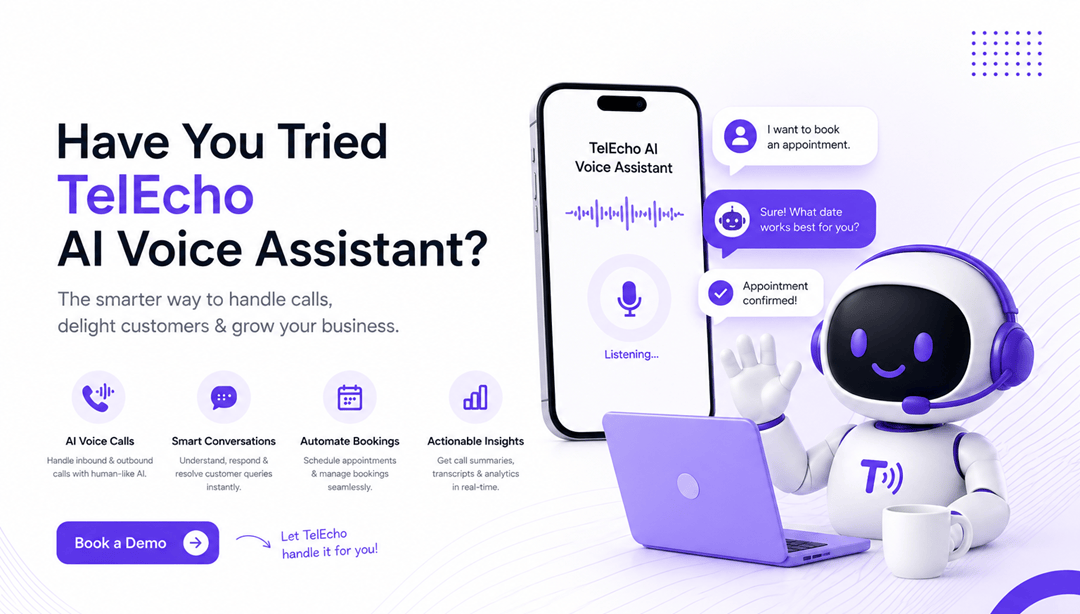
TelEcho is an enterprise AI voice agent platform built specifically for outbound and inbound calling across Phone, WhatsApp Business API, and WeChat.
The infrastructure layer is built on RTC League's WebRTC real-time communication stack, which is why TelEcho's latency and uptime numbers hold under real production call volumes rather than only in controlled demos.
Businesses that have moved outbound operations to TelEcho report operational cost reductions of approximately 60% compared to equivalent human agent teams, with no drop in lead qualification quality and a significant reduction in COD return rates for e-commerce clients in South Asian markets.
If your outbound call operation is still running entirely on human agents, the economics of switching have become hard to ignore.
.png)
.png)
.png)