
.png)
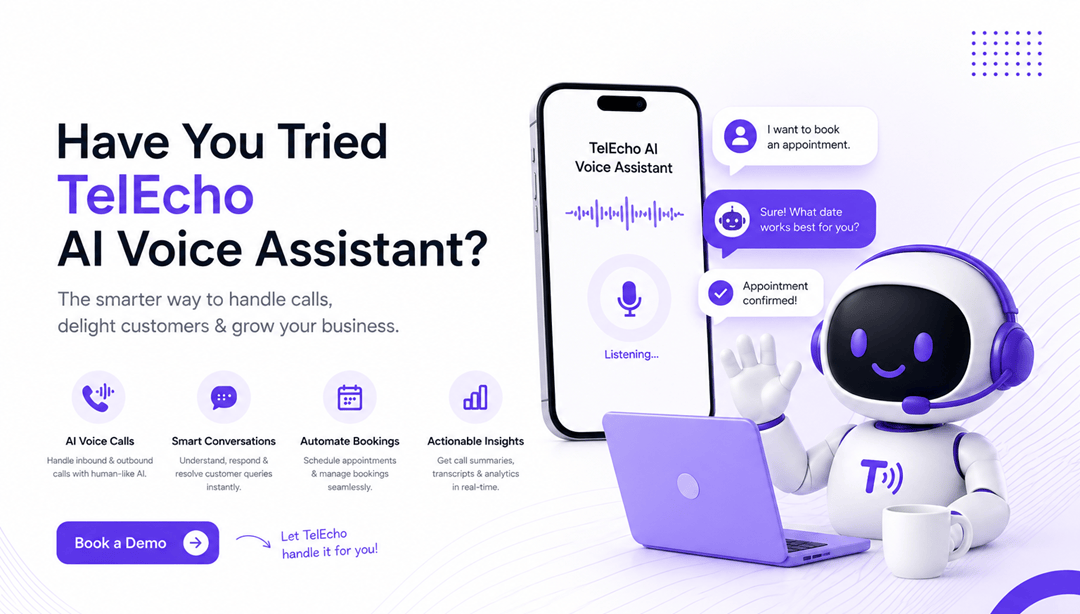
Most businesses handling high call volumes know the drill: long queues, missed calls, and agents stuck answering the same questions all day. It bleeds money and frustrates customers who just want a quick answer. That's the exact problem TelEcho was built to solve, not with another chatbot that vaguely promises "smart conversations," but with a production-ready conversational AI platform that actually takes action.
If you haven't come across TelEcho yet, this is a good time to look closer.
What Is TelEcho, Exactly?
TelEcho is a conversational voice AI platform developed by RTC League. It lets businesses build AI agents that handle real phone calls, WhatsApp messages, and WeChat conversations, all from a single workflow. You describe your agent in plain language, and TelEcho builds the call-ready logic, no coding required.
What sets it apart from the wave of AI voice assistants flooding the market right now is a simple but important distinction: TelEcho isn't just conversational. It's transactional.
That means if your agent books an appointment but the CRM doesn't confirm it, TelEcho doesn't pretend the booking happened. It retries, escalates, or hands off, whichever keeps the data accurate. For businesses where a missed booking or a lost follow-up actually costs money, that reliability matters.

The Problem Most Voice AI Tools Don't Solve
Here's something worth understanding before choosing a voice AI platform for your business: most tools stop at the conversation.
They'll answer a question, handle a greeting, maybe collect some details. But the moment a customer says, "Book me in for Thursday at 2 PM," the gap between AI and action becomes very obvious. Either a human still has to step in, or the system logs a note that nobody reads.
TelEcho closes that gap. Its AI agents listen, reason over the workflow you've defined and then take real actions, updating your CRM, confirming bookings, sending notifications and routing tickets. The AI thinks and acts, not just talks.
This is particularly relevant for teams managing high volumes of repetitive but consequential calls: logistics dispatchers chasing ETAs, healthcare referral coordinators booking patient appointments, sales teams following up on warm leads. These aren't tasks that need a human on every call. They need a reliable system that won't drop the ball.
What Makes It a Serious Contender Among Voice AI Platforms
The voice AI space has gotten crowded fast. Retell AI, Vapi, Bland AI, SoundHound, there are options at every price point and complexity level. So, where does TelEcho actually stand out?
Ultra Low latency. It's the difference between a voice interaction that feels like a real conversation and one that feels like talking to a telephone system from 2009. TelEcho's low-latency AI voice means customers don't notice the AI thinking.
Built-in noise suppression. Background noise has historically been one of the messiest problems in voice AI for businesses operating in real-world environments, such as warehouses, clinics and busy offices. TelEcho filters it at the infrastructure level, so calls stay clear even when the environment isn't.
Concurrent answering with no queues. One TelEcho agent can answer every inbound call simultaneously. No hold music. No abandoned calls sitting at 30–40% because someone couldn't wait. The platform's WebRTC-powered infrastructure handles peak demand without performance degradation.
Omnichannel thread continuity. A customer can call in, then follow up on WhatsApp, and the agent knows the full context of both interactions. The same workflow runs across phone, WhatsApp AI agent, and WeChat AI agent, so customers aren't re-explaining themselves to a different "bot" on each channel.
50+ integrations out of the box. Salesforce, Zapier, Google Calendar, Slack, ClickUp, Zoom, AWS and TelEcho connect to the tools already running your operations so that agents can update systems without manual handoffs.
Real Use Cases Worth Knowing About
TelEcho is a general-purpose assistant. It's built for specific, high-frequency call scenarios where automation actually makes financial sense. A few that stand out:
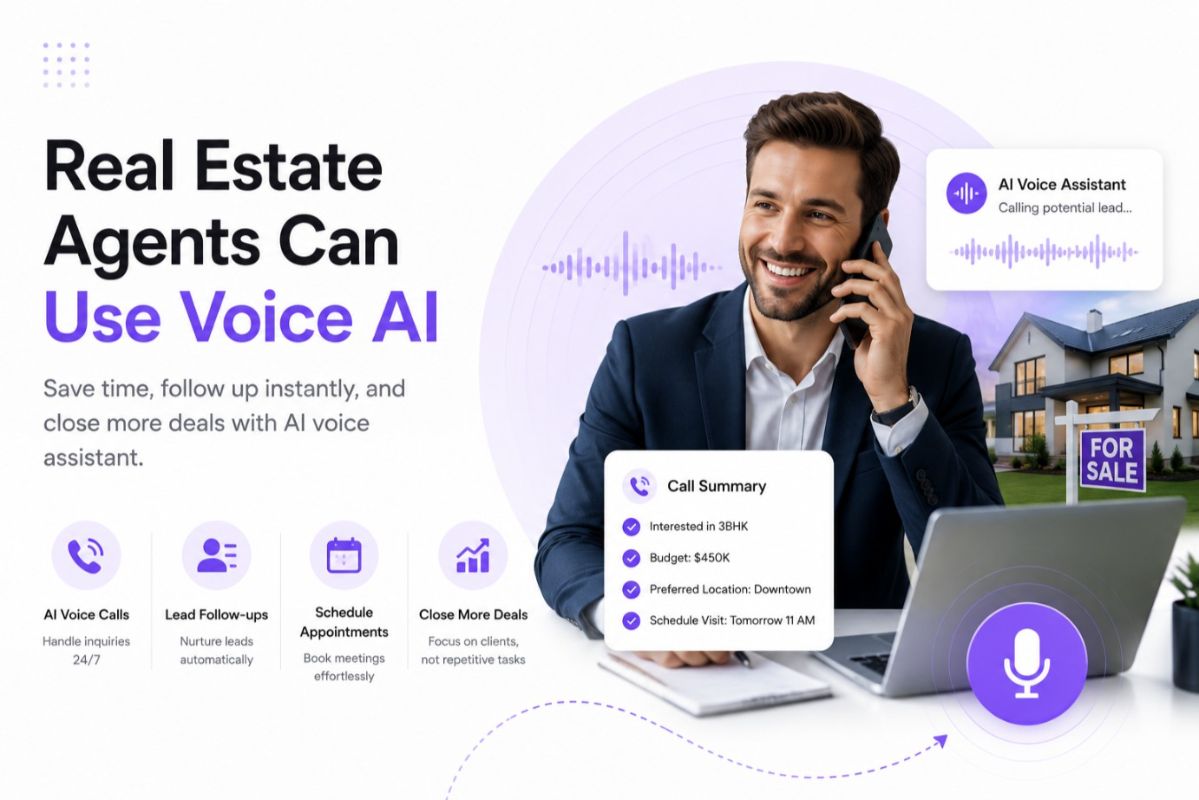
Sales follow-up agents. Warm leads go cold fast. A TelEcho sales agent can chase leads, qualify intent, schedule demos, and log every outcome in your CRM, automatically, around the clock. For small businesses running lean sales teams, this is closer to having the best AI sales assistant software for small businesses than hiring two extra reps.
Customer support triage. Inbound calls get answered immediately, key details are captured, and tickets are routed to the right team with no human step in between. First Call Resolution climbs. Average Handling Time drops. The numbers TelEcho cites, FCR going from 68% to over 90%, are consistent with what well-implemented AI call automation achieves in contact centers.
Healthcare referral chase. Calling patients from referral lists is time-consuming and repetitive work. TelEcho agent handles those calls, books appointments, and updates referral status in connected systems. For healthcare teams who are managing patient pipelines, this is meaningful.
Logistics dispatch. The platform's Logistics Dispatcher Agent calls drivers for live ETAs, updates the TMS or CRM, and keeps dispatch teams informed. For fleet operations where real-time communication is critical, having an AI agent running those check-in calls continuously is a genuine operational improvement.
Enterprise Grade Controls Without Enterprise-Level Pain
A lot of voice AI platforms are easy to demo but hard to run in production. Things break, calls fail silently, and there's no way to know what happened.
TelEcho addresses this with session replay, latency breakdowns, versioning, and safe rollback, standard expectations for production-grade software that the voice AI world has been slow to adopt. If something goes wrong in a live deployment, you can see exactly where and why, and roll back without downtime.
For enterprise teams evaluating an enterprise conversational AI platform, this kind of observability is often what separates a tool that stays in production from one that gets quietly retired after a rough quarter.
It also connects to both ChatGPT and Claude as underlying LLM options, giving teams flexibility to choose the model that performs best for their specific call flows rather than being locked into one provider.
Setup Is Faster Than You'd Expect
The typical objection to deploying voice AI is the time investment: training, integrating, testing and going live. TelEcho's pitch is that most of that friction is gone.
You describe your agent in a natural language, and TelEcho generates the visual of the workflow. You connect your telephony, CRM, and other tools. You go live. The platform targets days, not months, for production deployment, and lets you edit logic in place without new deployments, which means tuning a live agent doesn't require a full development cycle.
For teams that have months-long implementation projects that have burned with traditional conversational AI development platforms, that's a real change.
Who Should Be Paying Attention
TelEcho is a fit for businesses where:
Call volume is high, and repeatability is high (same questions, same follow-up sequences, same booking flows)
Missing a call or a follow-up has a real cost, a lost lead, a delayed shipment or a patient who wasn't reached.
The team is already using tools like Salesforce, Slack, or Google Calendar and needs the AI to work inside those systems, not alongside them.
WhatsApp or WeChat are part of the customer communication stack, especially relevant for businesses in markets where those channels are primary.
It's a particularly strong option for small and mid-sized businesses looking for AI voice agents that don't require a large engineering team to operate. The no-code workflow builder and plug-and-play integrations mean a non-technical ops manager can build and adjust agents without waiting on a developer.
The Bigger Picture
Voice AI is growing fast. The global market was around $7 billion in 2024 and is on track to exceed $33 billion by 2030. Most of that growth is coming from businesses replacing or augmenting traditional call handling just because the unit economics work. An AI agent that handles 500 calls a day at consistent quality, with no sick days or training overhead, changes the structure of the cost of customer operations.
What TelEcho gets right is building for that production reality. It's not a demo. It's not a prototype. It's a platform designed for the calls that actually need to happen, reliably, repeatedly.
If your team is still routing those calls manually, it might be worth finding out how fast that could change.
Ready to see it in action? Book a demo at telecho and run a live agent through your actual workflows.
.png)
.png)
.png)